Moving images and sound collections are the most fragile in a museum's diverse holdings. If these artifacts are not stored and cared for properly they can become compromised.
An archivist has many tools to remediate damage to the object and can apply them to preserved the media long term or at least stabilize in order to capture the image before it is lost forever.
When a video tape is not stored properly and exposed to heat and humidity it can become compromised and develop a condition known as hydrolysis or commonly called "sticky shed". The binder that holds the oxide or metal flakes that store the signal becomes viscous or stick. The binder is made of polyurethane and the urethane molecules can absorb moisture and become sticky as seen in the photo.
The archivist can stabilize the tape by "baking" it in a scientific incubator at 120 degrees fahrenheit for 48 hours or more depending on the severity. This allows the moisture to escape slowly as not to disturb the composition of binder and oxide balance.
Once stabilized the tape is then cleaned by a specialized cleaner that will remove the excess oxide and binder in order to put the tape into the video tape machine and capture the image. There is no long-term solution to remediate this problem so digitizing or capturing the image is the only way to save it.
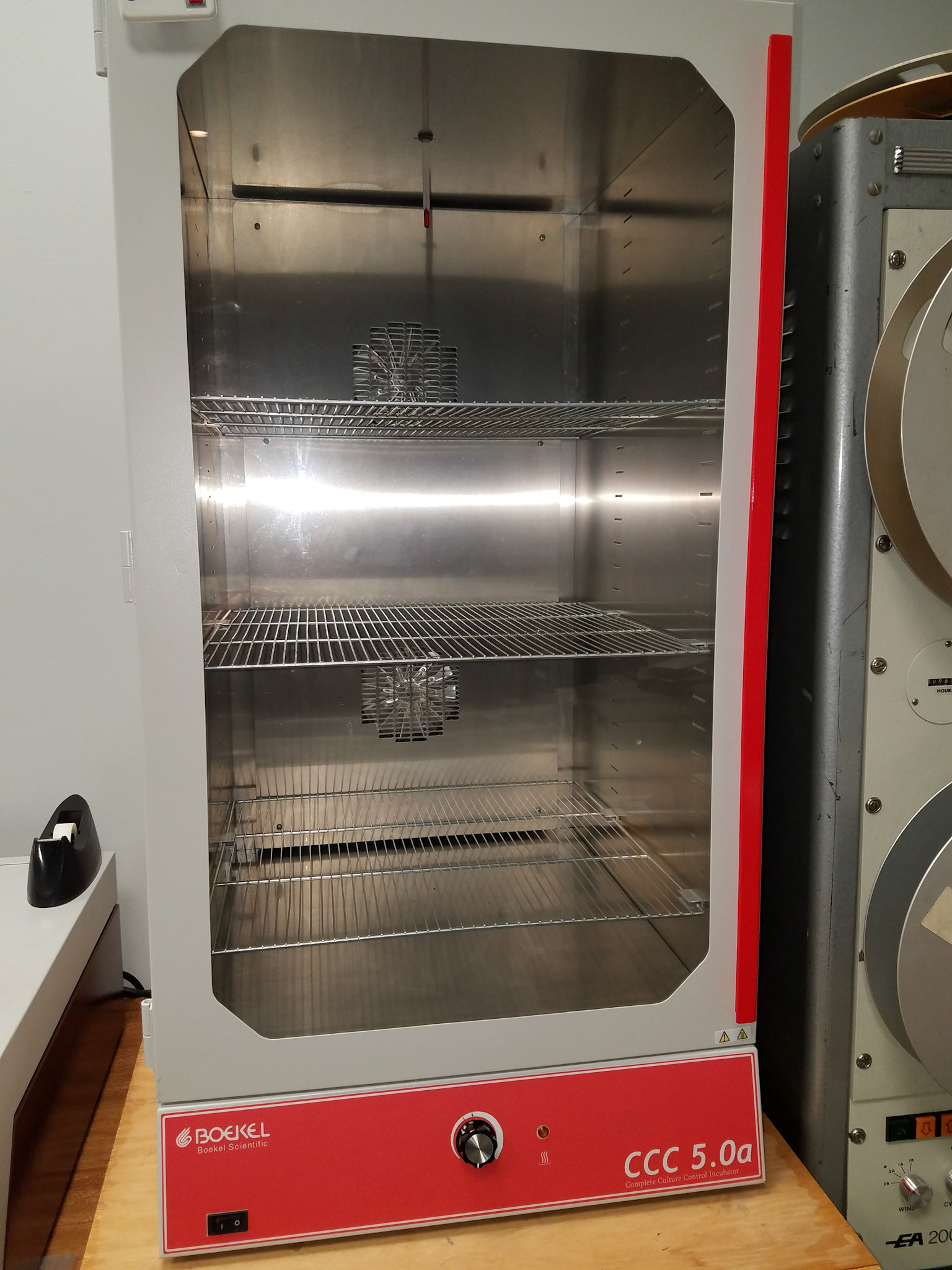
incubator
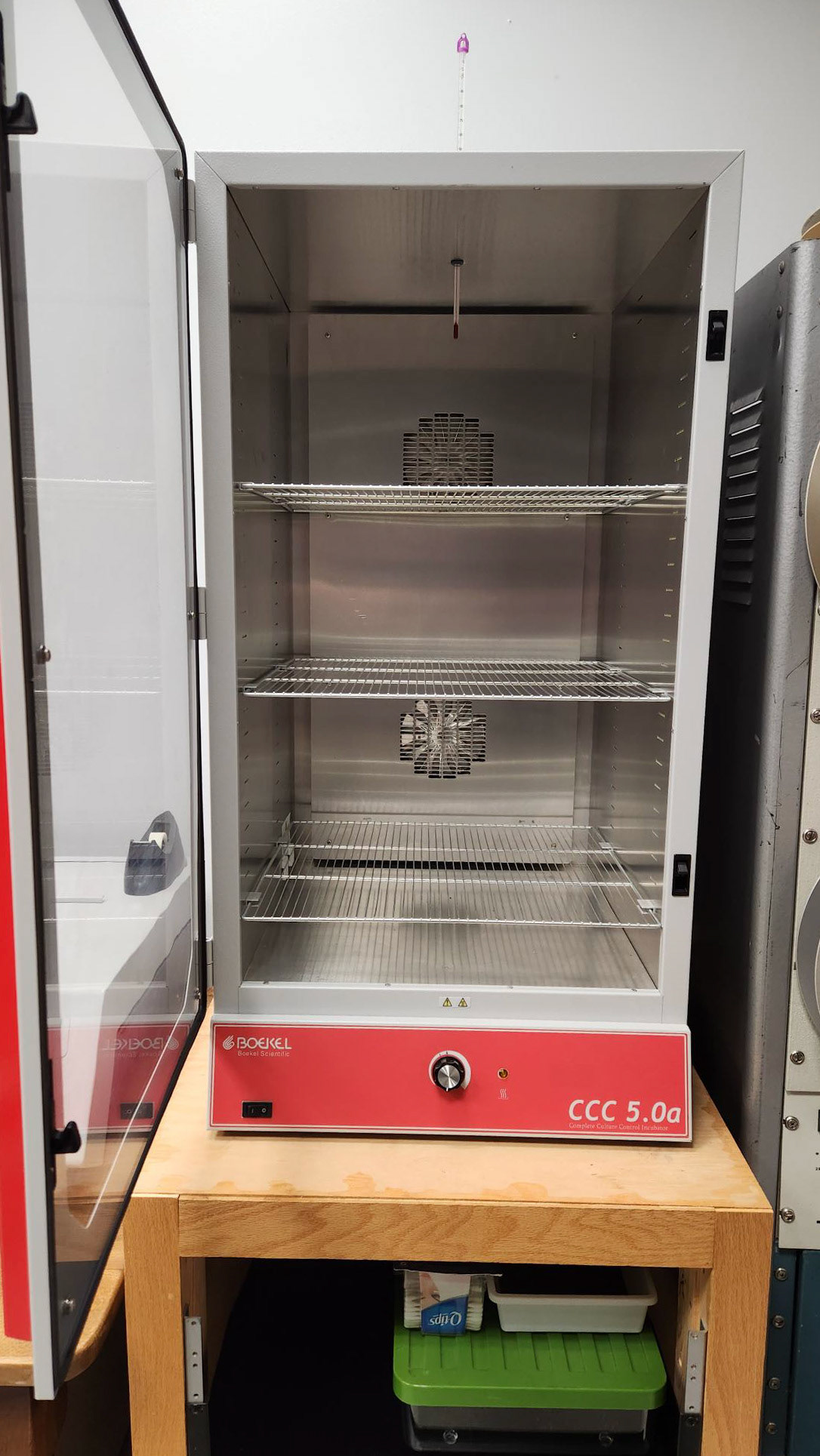
incubator
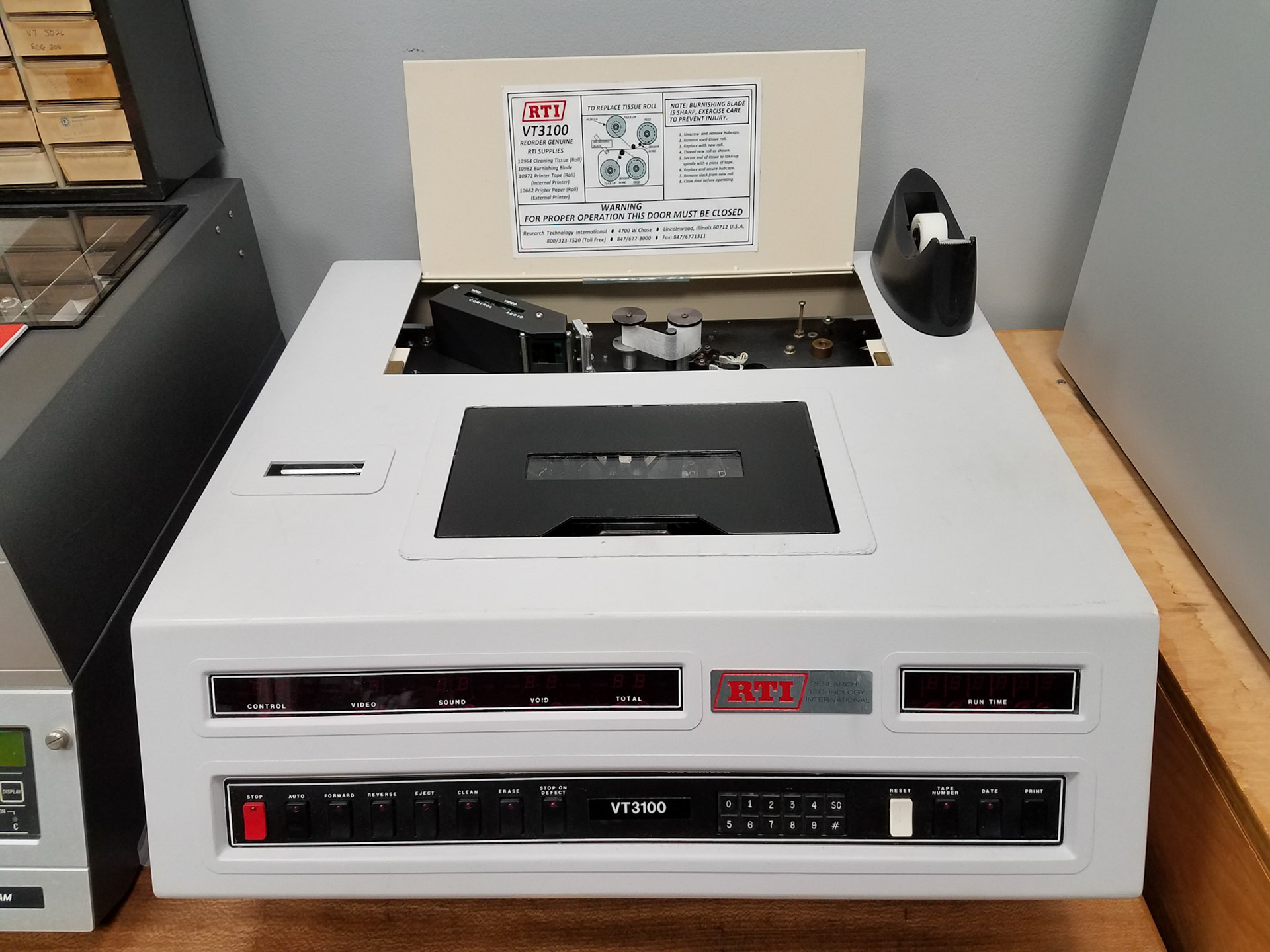
3/4" Umatic tape cleaner
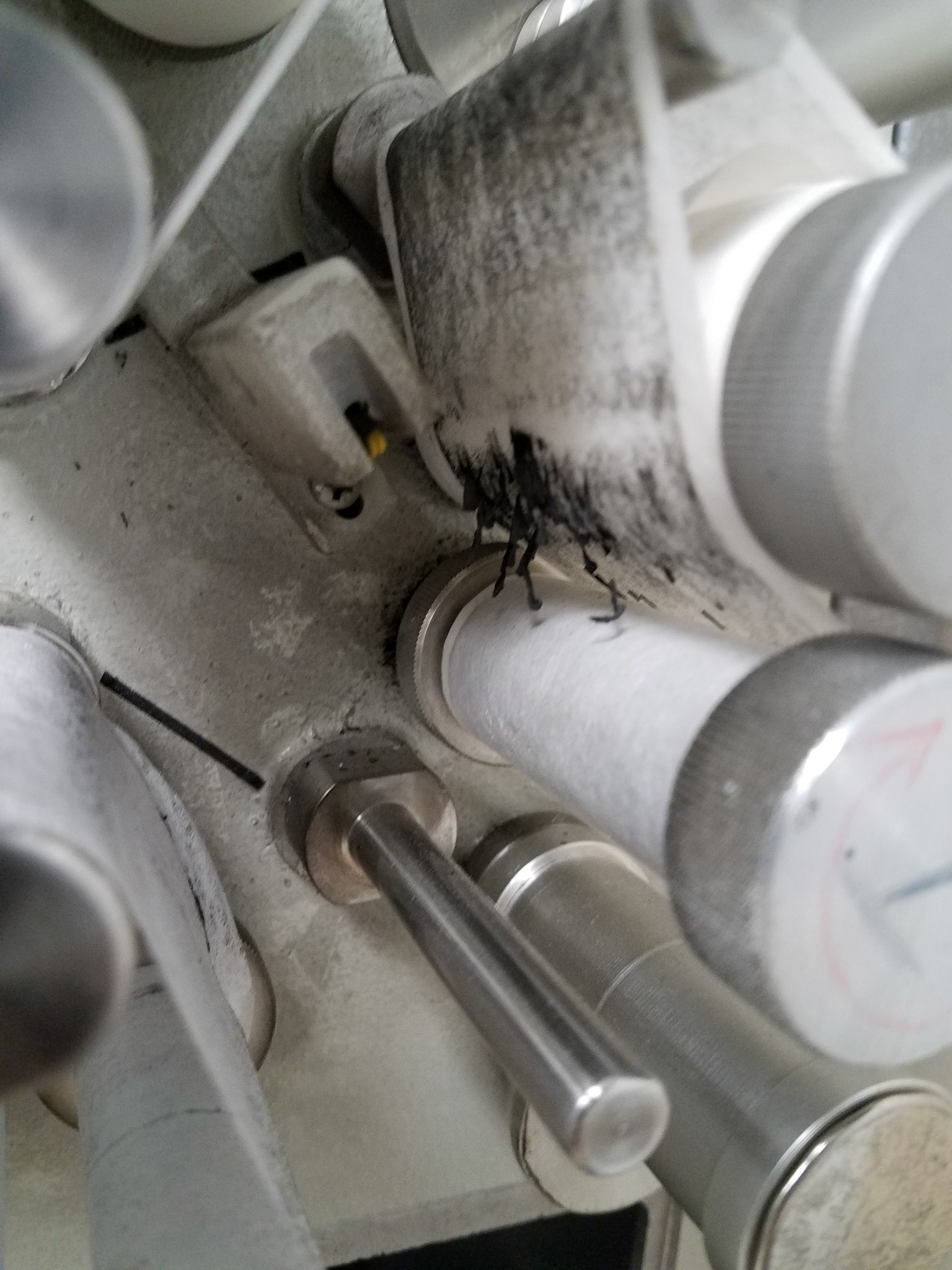
Shed from tape cleaning
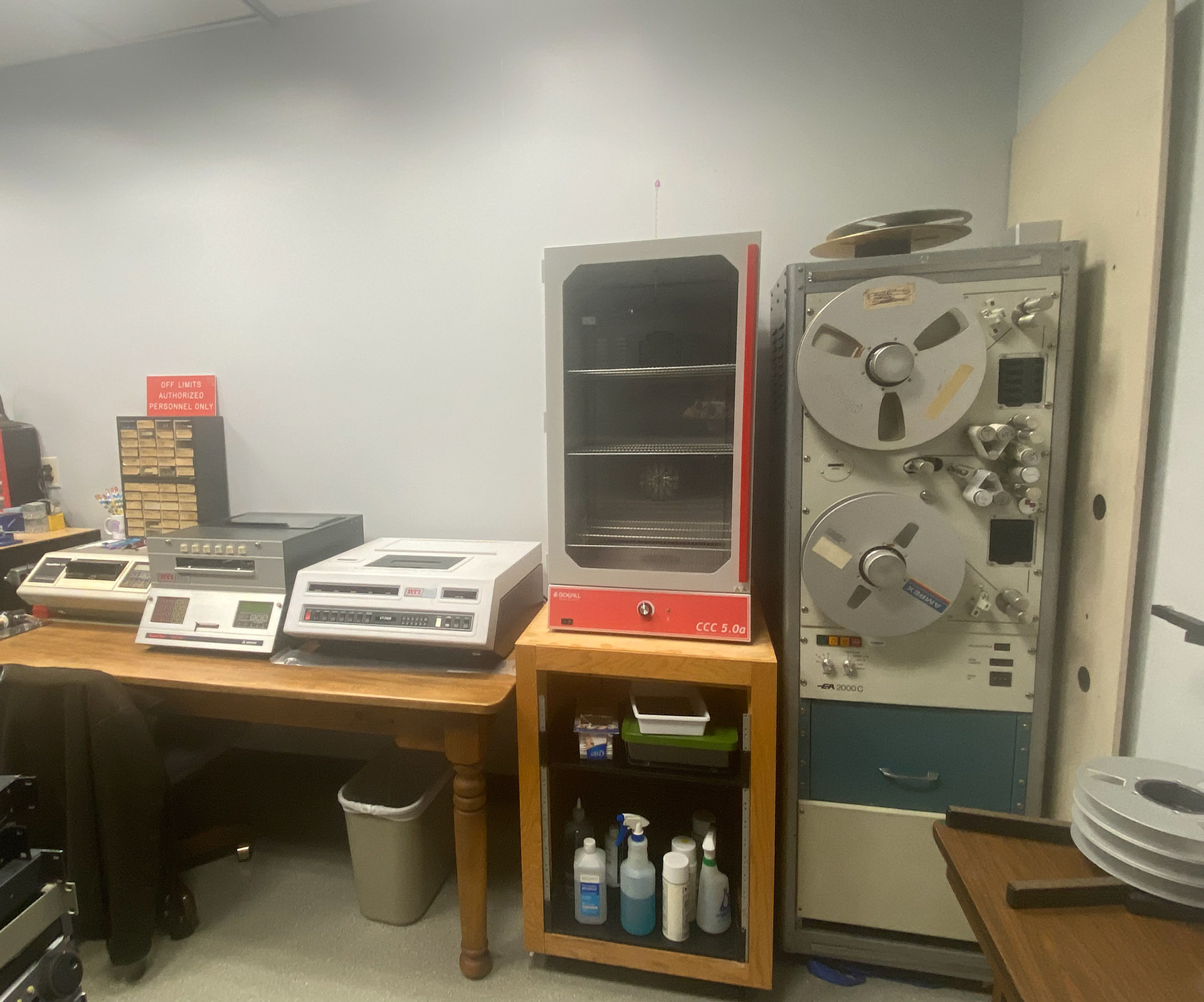
Back room cleaning and incubatiion station
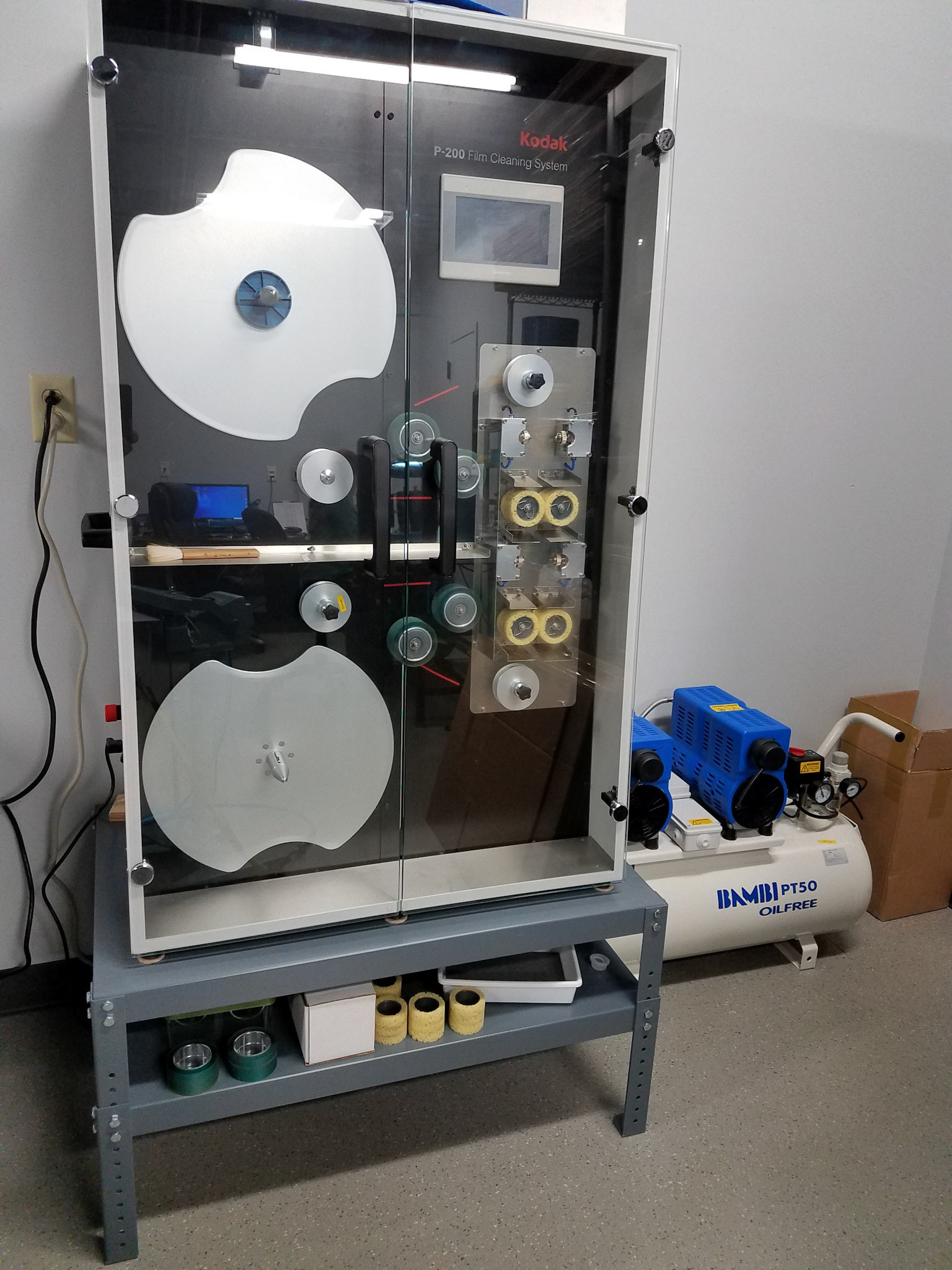
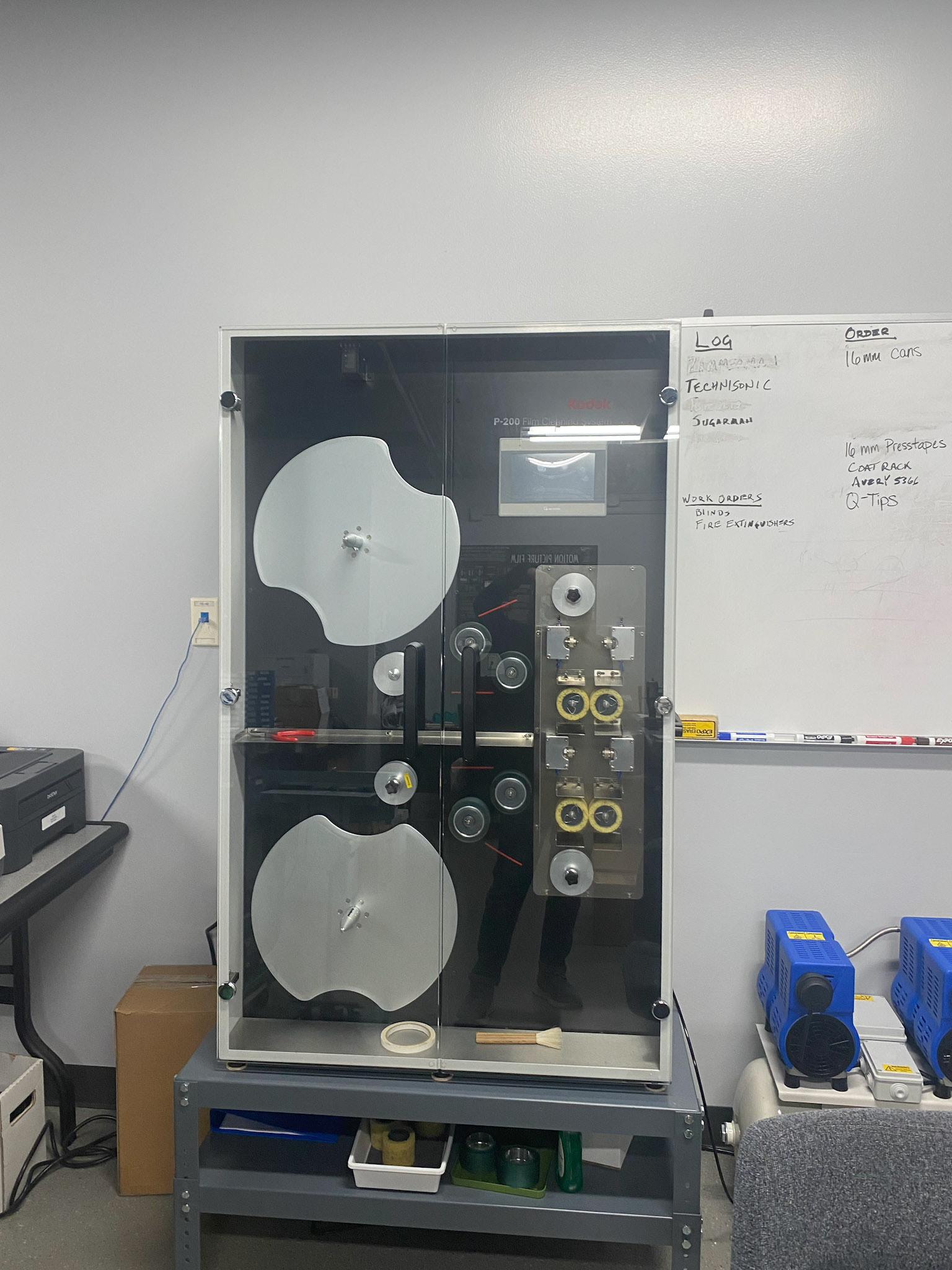
Kodak film cleaner